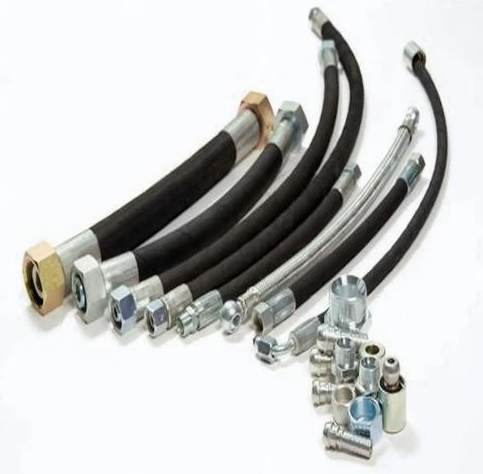
10mm to 50mm diameter water-cooled heat dissipation hoses
In the context of rapid technological advancements, data center cooling has become an increasingly crucial factor in improving computing efficiency and equipment stability. Liquid cooling technology, as a highly efficient cooling solution, is gaining popularity due to its superior heat dissipation performance. This article will delve into water-cooled heat dissipation hoses suitable for data centers, particularly industrial fluid transport hoses with diameters ranging from 10mm to 50mm, helping users better understand their structure, characteristics, and application scenarios.
I. Background and Importance of Liquid Cooling Technology
With the rise of technologies such as cloud computing, big data, and artificial intelligence, the processing power and computing demands of data centers are constantly increasing, inevitably leading to higher heat generation from equipment. Traditional air cooling methods often fall short in high-density, high-load applications. In contrast, liquid cooling technology uses water or other cooling liquids, achieving more efficient heat exchange, significantly reducing equipment temperature, and improving its operating efficiency and lifespan.
A liquid cooling system typically includes a cooling source, heat dissipation units, and liquid cooling pipes. The design and materials of the liquid cooling pipes directly affect the cooling effect and system reliability; therefore, selecting suitable water-cooled heat dissipation hoses is particularly important.
II. Features of 10mm to 50mm Diameter Water-Cooled Heat Dissipation Hose
Water-cooled heat dissipation hoses with diameters from 10mm to 50mm not only possess unique structural and material characteristics but also exhibit unparalleled functional advantages, specifically including the following aspects:
1. Diverse Material Selection
Water-cooled heat dissipation hoses are typically made of materials such as polyurethane (PU), chlorinated polyethylene (PVC), and polytetrafluoroethylene (PTFE). The choice of different materials affects the hose's temperature resistance, pressure resistance, flexibility, and corrosion resistance. For example, PTFE hoses have excellent high-temperature resistance, making them suitable for transporting high-temperature liquids, while PVC hoses are widely used for general liquid transport due to their economic efficiency and flexibility.
2. Optimized Fluid Guiding Design
Water-cooled heat dissipation hoses in this diameter range are precisely designed to optimize fluid flow paths, reduce flow resistance, and ensure that liquid is efficiently and uniformly transported from the cooling source to the heat dissipation unit. By improving the rational matching of inner and outer diameters, the heat dissipation flux is increased, thereby enhancing the cooling capacity of the entire liquid cooling system.
3. Flexible Installation and Adjustment
Due to the flexibility of 10mm to 50mm diameter water-cooled heat dissipation hoses, users can flexibly install and configure them according to actual needs. Whether laid in a straight line or with a curved route, the hoses adapt easily and can be adjusted as needed, reducing installation difficulty and time costs.
4. Safe Connection and Sealing Performance
In liquid cooling systems, the connection and sealing of the hoses are crucial. High-quality water-cooled heat dissipation hoses are equipped with specially designed connectors and sealing rings to ensure good sealing performance even under high-pressure environments, preventing liquid leakage. This not only ensures equipment safety but also reduces maintenance costs.
III. Wide Range of Applications
10mm to 50mm diameter water-cooled heat dissipation hoses have wide applications in multiple industries, including:
1. Data Centers
Data centers are the main battleground for liquid cooling technology. Thanks to their efficient heat dissipation capabilities, water-cooled heat dissipation hoses are widely used in servers, storage devices, and network equipment. As equipment density increases, liquid cooling has become the preferred cooling solution. Water-cooled hoses facilitate heat exchange, keeping data centers operating at ideal temperatures.
2. High-Performance Computing
In fields such as high-frequency trading, scientific computing, and climate simulation, high-performance computers typically handle heavy computational loads. Water-cooled hoses are crucial for maintaining system stability, preventing overheating-induced malfunctions, and ensuring smooth computation.
3. Gaming and Virtual Reality
The pursuit of system performance by gamers has led to an increasing adoption of liquid cooling solutions in personal gaming consoles. In this field, water-cooled hoses offer more than just heat dissipation; they also enhance aesthetics. Designers often integrate the hose wiring with the chassis design to create unique visual effects.
4. Manufacturing and Industry
In many industrial applications, the heat generated by machinery during operation must be removed promptly to prevent malfunctions. For example, in laser processing and injection molding, water-cooled hoses effectively reduce equipment temperature, improve production efficiency, and thus boost overall productivity.
IV. Precautions for Selecting Water-Cooled Heat Transfer Hose
When selecting suitable water-cooled heat transfer hoses, users should consider the following points:
1. Determine the Applicable Diameter
Different equipment and liquid cooling systems have different diameter requirements for hoses. Users need to select a suitable diameter of 10mm to 50mm based on specific needs to ensure smooth fluid flow.
2. Pay Attention to Pressure and Temperature Resistance
Water-cooled heat transfer hoses need to have corresponding withstand capabilities in high-pressure and high-temperature environments. When selecting, try to choose products that meet the system design parameters to avoid leaks or malfunctions due to material failure.
3. Manufacturing Process and Brand
Products from well-known brands generally undergo rigorous testing and quality control. Choosing water-cooled heat transfer hoses from large manufacturers offers greater assurance. Users should also pay attention to the product's manufacturing process, as a superior manufacturing process can improve the overall performance and lifespan of the product.
4. Consider Accessory Compatibility
Water-cooled heat transfer hoses typically need to be connected to various connectors, pumps, and cooling units. Users should ensure compatibility with existing equipment when purchasing to achieve optimal liquid cooling performance.
Conclusion
In today's ever-evolving data centers and high-performance equipment, the selection of water-cooled heat dissipation hoses is of paramount importance. Hoses ranging from 10mm to 50mm in diameter, with their superior performance, flexible applications, and excellent safety, have become an indispensable component of liquid cooling systems. By fully understanding their characteristics and applications, users can not only improve the heat dissipation efficiency of their equipment but also extend its lifespan and create a more stable working environment.
With the continuous development of liquid cooling technology, the application prospects of water-cooled heat dissipation hoses will become even broader. Choosing the right water-cooled heat dissipation hoses is not only about protecting equipment but also about providing strong support for future high-tech development.
