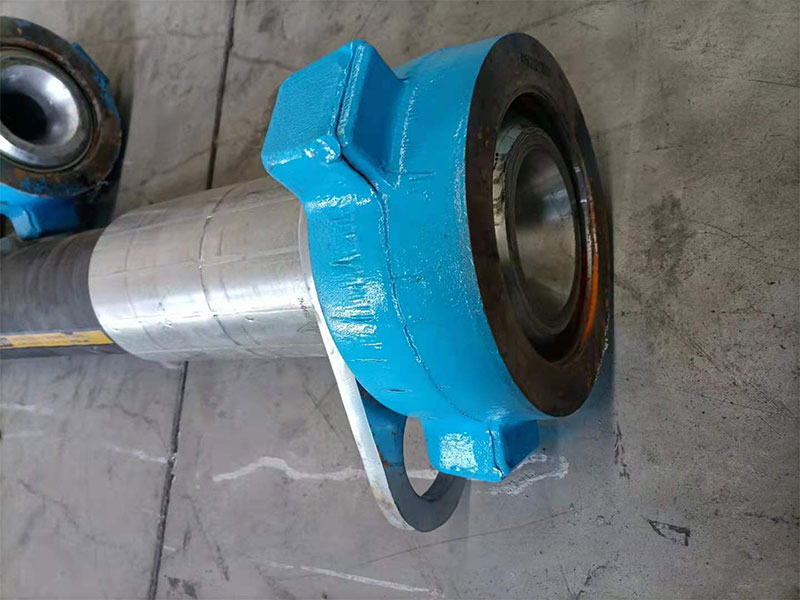
API 16C Standard Rotary Drilling High-Pressure Hose for Mud Delivery
In modern drilling operations, safety and efficiency are paramount considerations. Fire-resistant drilling hoses, as a key piece of equipment, play an indispensable role, especially in mud transport and rotary drilling. High-pressure hoses conforming to API 16C standards, in particular, provide reliable protection for the oil and gas industry due to their superior performance and wide range of applications. This article will comprehensively analyze the design, uses, performance characteristics, and market information of fire-resistant drilling hoses to help engineers and purchasers better understand their importance.
I. Definition and Composition of Fire-Resistant Drilling Hoses
Fire-resistant drilling hoses are mainly used in mud transport systems at drilling sites. Their basic function is to transport high-pressure mud, and they possess fire resistance, corrosion resistance, and high-pressure resistance. These hoses typically consist of three parts: an inner layer material, a reinforcing layer, and an outer layer material:
1. Inner Layer Material: Usually made of synthetic rubber, ensuring good wear resistance and safety.
2. Reinforcing Layer: Utilizing high-strength fiber or steel wire braiding to enhance the hose's strength and pressure resistance.
3. Outer Material: Effectively resists external environmental influences such as high temperatures and chemical corrosion, while providing necessary protection for the pipe.
II. Necessity of API 16C Standard
API 16C is a standard developed by the American Petroleum Institute (API) specifically regulating the use of flexible hoses in drilling fluid delivery systems. The core of this standard is ensuring the safety and reliability of the hose. According to API 16C requirements, hoses must undergo rigorous testing, including tensile tests, fracturing resistance tests, and bending tests. These tests ensure that the hose maintains robust performance under extreme operating conditions, preventing accidents such as bursting or leakage, and ensuring construction safety.
III. Application in Rotary Drilling with Mud Delivery
In drilling operations, the correct delivery of mud directly affects the cooling and lubrication of the drill bit. Fire-resistant drilling hoses are responsible for delivering high-pressure mud to the drill bit in this process. Their specific applications are mainly reflected in the following aspects:
1. Improved Drilling Efficiency: An efficient mud delivery system can accelerate drilling speed and reduce downtime.
2. Drill Bit Protection: Continuous cooling and lubrication prevent drill bit overheating, extending drill bit lifespan.
3. Ensuring Construction Safety: Fire-resistant design and high-pressure resistance reduce the risk of leaks or explosions.
In complex geological conditions, drilling often faces multiple challenges. Using fire-resistant drilling hoses that meet API 16C standards can effectively reduce potential risks.
IV. Performance Characteristics
1. High-Pressure Resistance
Fire-resistant drilling hoses can withstand extremely high operating pressures, typically between 3000 psi and 5000 psi, with higher models reaching up to 10000 psi. This makes them suitable for deep well drilling operations, less prone to rupture, and ensures rapid and stable mud delivery.
2. Fire Resistance
Their special composite materials allow fire-resistant drilling hoses to maintain excellent performance even at high temperatures. This characteristic is essential, especially in environments with potential fire risks, effectively reducing the risk of sudden accidents caused by high temperatures.
3. Corrosion Resistance
Due to the special chemical composition of drilling fluids, fire-resistant drilling hoses must possess excellent corrosion resistance. Even under repeated exposure to sunlight, rain, and chemical agents, the hose can maintain its efficiency and safety.
4. Flexibility and Operability
Good flexibility and adaptability make fire-resistant drilling hoses easier to install and use, allowing them to adapt to different operating scenarios and geological environments. This reduces the burden on operators and improves construction efficiency.
V. Market Trends and Purchasing Recommendations
In recent years, with the continuous growth of global energy demand, the market demand for fire-resistant drilling hoses has steadily increased. When selecting such products, operators should pay attention to the following points:
1. Quality Certification: Ensure that the selected product has relevant certifications such as API 16C, and that the product has a good reputation and reliable performance.
2. Supplier Reputation: When selecting suppliers, it is necessary to investigate their reputation, after-sales service capabilities, and production capacity, and choose a partner that can provide comprehensive support.
3. Technical Support: High-quality technical support helps companies better apply products and solve various problems encountered in practical use.
VI. Conclusion
The application of fire-resistant drilling hoses is crucial to the modern drilling industry, especially high-pressure hoses that meet API 16C standards. Their superior performance provides a solid guarantee for improving drilling efficiency and ensuring construction safety. Through a comprehensive analysis of characteristics, applications, and market information, purchasers and users can better select and apply these key equipment, thereby achieving the optimal balance between safety and efficiency and promoting further development of the industry.
