Aramid Fiber Braided Hose – High Strength Lightweight Hose
Double layer fiber braided hose is a type of flexible pipeline product reinforced with two layers of high-strength synthetic fiber braided layers. Its working pressure covers the medium and low pressure range, and it plays a role in flexible connection and medium transmission in industrial fluid transportation, pneumatic systems, water cooling circuits, and general hydraulic pipelines. Compared with the steel wire braided reinforcement structure, the fiber braided reinforcement layer endows the hose with lighter weight and better flexibility while maintaining sufficient pressure bearing capacity, and has a clear application positioning in working conditions that require frequent bending or movement.
The double-layer fiber weaving structure is the core feature that distinguishes this product from single-layer woven hoses. There is a middle adhesive layer between the two woven layers, which forms an overall reinforcement structure through interlayer bonding. The second woven layer provides additional pressure bearing capacity on top of the first layer, significantly increasing the burst pressure of the hose compared to a single-layer structure, while maintaining the flexibility of the pipe body without a significant decrease. This structure belongs to the medium pressure level in the fiber braided hose series, balancing pressure performance and installation flexibility.
2、 Structural design and material composition
Inner layer (inner adhesive layer): The material selection depends on the type of conveying medium. For water, air, and aqueous media, the inner layer is usually made of EPDM rubber or SBR rubber; For mineral oil and hydraulic oil-based media, nitrile rubber is selected; For working conditions with high requirements for chemical corrosion resistance, fluororubber or ultra-high molecular weight polyethylene lining can be used. The inner layer needs to maintain low permeability and a smooth inner wall to reduce fluid resistance and prevent the medium from penetrating into the reinforcement layer. The inner layer thickness is usually between 1.5mm and 3.0mm.
Enhancement layer: Adopting a two-layer high-strength synthetic fiber weaving structure. Fiber materials are usually selected from polyester fibers, aramid fibers, or vinylon fibers. Polyester fibers have high cost-effectiveness and good fatigue resistance; Aramid fibers have higher specific strength and can reduce the weight of pipes under the same pressure bearing capacity. The weaving angle is controlled around 54 ° 44 'to balance radial compression capacity and axial flexibility. There is a middle adhesive layer between the two woven layers to ensure firm bonding and prevent interlayer separation during use.
Outer layer (outer rubber layer): The main material is wear-resistant and weather resistant synthetic rubber, usually using chloroprene rubber, styrene butadiene rubber or chlorosulfonated polyethylene. The outer layer should have wear resistance, ozone resistance, UV resistance, and oil resistance. In scenarios with severe wear conditions, wear-resistant fillers can be added to the outer rubber formula to enhance wear resistance. The outer surface is usually marked with identification tape along the length direction, indicating product specifications and pressure levels.
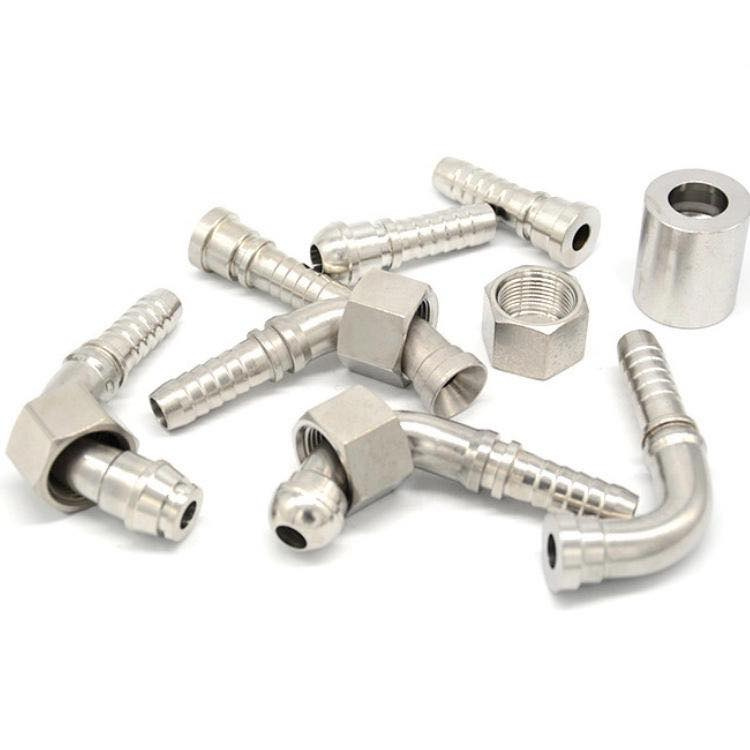
End connectors: Depending on the application scenario, crimping metal joints, quick plug joints, or flange connections can be selected. The buckle type joint presses the hose body onto the joint core through a metal outer sleeve, forming a dual effect of mechanical locking and sealing.
3、 Core performance parameters
Working pressure: The working pressure of double-layer fiber braided hoses is usually in the range of 1.0MPa to 6.0MPa, and the specific value depends on the inner diameter specification and fiber type. The blasting pressure shall not be less than 4 times the working pressure.
Temperature range: The standard product operates within a temperature range of -30 ℃ to+100 ℃, and some products can be extended to+120 ℃. The low-temperature performance depends on the glass transition temperature of the inner and outer adhesive materials.
Inner diameter specifications: Common inner diameters range from 6mm to 50mm, including 1/4 inch, 5/16 inch, 3/8 inch, 1/2 inch, 5/8 inch, 3/4 inch, 1 inch, 1-1/4 inch, 1-1/2 inch, 2 inch, and other specifications.
Minimum bending radius: Fiber woven hoses have better flexibility than steel wire woven hoses of the same specification, and the minimum bending radius is usually between 3 and 5 times the diameter of the pipe.
Wear resistance: The wear resistance of the outer adhesive layer is usually characterized by Akron wear or DIN wear. The wear of high-quality products is controlled at a low level to extend their service life under moving and dragging conditions.
Pulse life: Under pressure cycling conditions, double-layer fiber braided hoses need to have sufficient fatigue life to meet the requirements of frequent pressure fluctuations in hydraulic and pneumatic systems.
