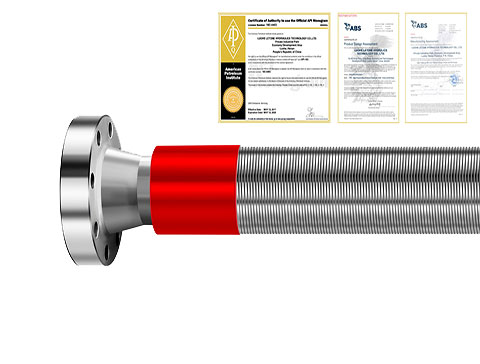
Marine Ship Oil Tanker Jumper Connection Hose
In the field of ocean engineering, oil tanker crossovers and wear-resistant hoses for ship crude oil transportation play a crucial role. With the continuous growth of global energy demand, especially the demand for crude oil, related marine engineering technologies are also constantly innovating and developing. This article will delve into the main applications of oil tanker crossover pipes, the characteristics and advantages of wear-resistant hoses, and their importance in ocean transportation.
1、 Basic concepts and application scenarios of oil tanker takeover
Tanker crossover refers to pipeline systems used between oil tankers or between oil tankers and offshore platforms, typically for the transportation of crude oil, natural gas, and other liquid substances. This pipeline system not only improves the transportation efficiency of oil products, but also reduces the risks during transportation.
1.1 Structural Design of Crossover
The oil tanker cross-over pipe is generally made of high-strength steel, which can withstand the influence of natural factors such as waves and wind. It adopts a special coating inside to reduce the possible corrosion of liquids during transportation. In addition, the joint part of the crossover pipe is designed for quick connection and disassembly, making it easy to operate during replacement or maintenance.
1.2 Application Scenarios
The oil tanker crossover is mainly applied in the following scenarios:
-Tanker refueling: During navigation, tankers need to refuel, and cross connections make refueling work easier and more efficient.
-Crude oil transportation between offshore platforms and oil tankers: Under normal circumstances, offshore platforms need to transport crude oil to oil tankers stably for a long time, and the use of cross-over pipes effectively ensures the smoothness of this process.
-Crude oil transfer in emergency situations: In the event of a tanker malfunction or leakage, a crossover pipe can quickly transfer crude oil to another tanker or offshore platform, thereby minimizing environmental pollution and economic losses.
2、 Characteristics and advantages of wear-resistant hoses
With the continuous advancement of ocean engineering technology, wear-resistant hoses are becoming increasingly common in crude oil transportation. Wear resistant hoses can be used not only on land, but also widely in marine environments, providing great flexibility and effectiveness for transportation systems.
2.1 Materials and Construction of Wear resistant Hoses
Wear resistant hoses are usually made of composite materials such as polyurethane, rubber, and plastic. These materials have excellent wear resistance, corrosion resistance, and flexibility, and can withstand high pressure and harsh marine environments. The internal structure of the hose is designed as a multi-layer composite structure to improve strength and durability, while the outer layer is specially treated to prevent UV and seawater erosion.
2.2 Advantages
Compared to traditional piping systems, wear-resistant hoses have the following advantages:
-Strong adaptability: The length can be flexibly adjusted according to different ocean and transportation needs, suitable for complex marine environments.
-Lightweight and easy to operate: Compared to steel pipelines, wear-resistant hoses are lighter and easier to handle and install.
-High cost-effectiveness: The manufacturing cost of wear-resistant hoses is relatively low, and maintenance and replacement are relatively simple, reducing overall transportation costs.
-High safety: Due to its high toughness and wear resistance, wear-resistant hoses can effectively reduce the risk of leakage and protect the marine ecological environment.
3、 The synergistic effect of oil tanker crossover pipe and wear-resistant hose
In actual ocean transportation, the combination of oil tanker crossover pipes and wear-resistant hoses can improve the efficiency and safety of crude oil transportation. They play a synergistic role in the injection, extraction, and transfer of oil products. For example, the crossover system provides safety support for wear-resistant hoses through fixed points, while wear-resistant hoses provide a more flexible connection method for crossover.
3.1 Security Enhancement
Effective safety management is crucial during the transportation of liquids. By effectively combining oil tanker crossover pipes with wear-resistant hoses, companies can consider various potential risks during the design phase, thereby establishing a more comprehensive safety warning mechanism to respond to possible emergencies.
3.2 Efficiency improvement
Due to the flexibility of wear-resistant hoses, construction teams can complete connections and disassembly more quickly. As a solid foundation structure, the oil tanker cross pipe can provide stable support, making the entire crude oil transportation process more efficient and smooth.
3.3 Applicability Extension
Under different types of oil tankers and environmental conditions, crossover pipes and wear-resistant hoses can be flexibly adjusted as needed to ensure that the crude oil transportation system has a wide range of adaptability and can effectively meet the growing demand for energy transportation.
4、 The Development and Future Trends of Technology
Marine engineering technology, especially the technology of oil tanker crossover pipes and wear-resistant hoses, is also constantly developing. With the introduction of lightweight, intelligent and other technologies, future oil tanker crossover pipes and wear-resistant hoses will be more efficient and environmentally friendly.
4.1 Intelligent Management
In the future, oil tanker cross connections and hoses may be integrated into intelligent monitoring systems, which use sensors and IoT technology to monitor the real-time status of the transported fluid. Once abnormalities are detected, they can be immediately alerted, thereby improving the overall safety and efficiency of operations.
4.2 Material Innovation
The emergence of new materials will better support the needs of ocean engineering, including lighter, more wear-resistant, and more environmentally friendly hose materials that can work effectively in more demanding environments. The updated materials and processes will enable pipelines and hoses to achieve a higher balance between cost and performance.
4.3 Environmental Sustainability
With the increasing emphasis on environmental protection, sustainable materials will be increasingly used in future development to ensure that the production and use of oil tanker crossovers and hoses can reduce their environmental impact. This is not only a protection for the industry itself, but also a responsibility for global sustainable development.
