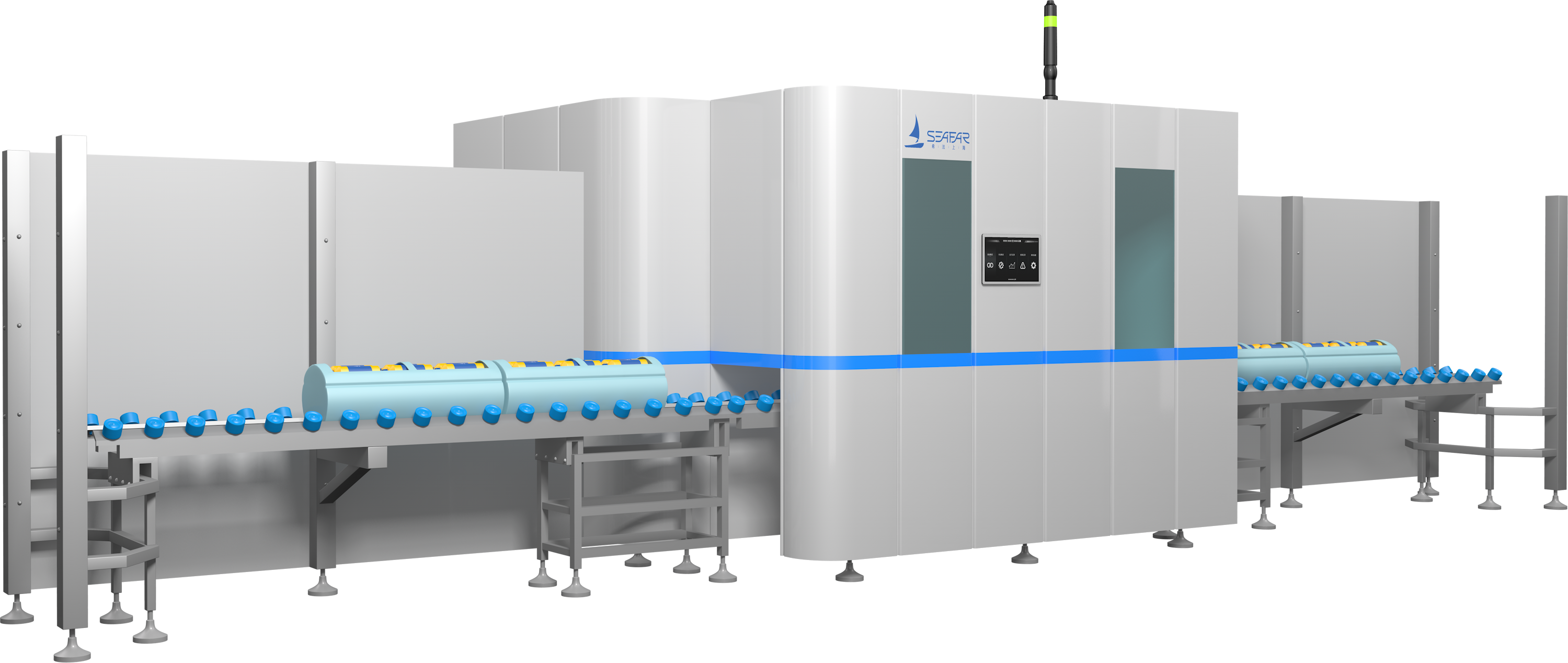
WIP Isostatic Press for Graphite Powder – High Density Graphite Molding Equipment
Warm isostatic pressing (WIP) is a special molding equipment that applies uniform, ultra-high pressure to powder materials under medium-temperature conditions (typically ≤85℃~200℃). The core principle of this technology is: using a liquid (water or heat transfer oil) as the pressure transmission medium, the powder material is placed in a sealed elastic mold, and ultra-high pressure is applied uniformly from all directions, supplemented by controlled heating, to achieve dense molding of the powder.
The difference between WIP and cold isostatic pressing and hot isostatic pressing: Cold isostatic pressing only forms at room temperature, and its effectiveness is limited for certain materials that are difficult to press at room temperature (such as certain polymer materials and graphite powder); warm isostatic pressing, through moderate heating, reduces the yield strength of the powder and improves molding efficiency. Hot isostatic pressing requires even higher temperatures (typically above 1000℃) and inert gas pressurization, making the equipment more complex. Warm isostatic pressing falls between the two, filling the technological gap in medium-temperature, high-pressure molding.
Core Applicable Materials:
Graphite Powder: Isostatic graphite, battery anode materials, graphene composite materials
Polymer Materials: Polyamide (Nylon), polyurethane elastomers, fluoropolymers, etc.
Electronic Ceramics: Multilayer ceramic capacitors, solid electrolytes, piezoelectric ceramics
Powder Metallurgy: Hard alloys, metal powders, magnetic materials
II. Core Structure and Key Technologies
High-Pressure Chamber: Forged from high-strength steel with a pre-strained steel wire winding structure. This technology keeps the chamber under pre-stress when subjected to ultra-high internal pressure, significantly improving fatigue life and reliability. The chamber diameter in some large industrial equipment can reach 800mm, and the height can reach 2000mm.
Heating System: The heating methods for isostatic pressing equipment mainly include external heating water tank circulation heating and external wrapping heating of the working cylinder. The former achieves uniform heating inside the chamber through a hot water circulation system, suitable for large-capacity industrial equipment; the latter uses an electric heating module to wrap the outer wall of the chamber, heating the chamber and internal medium through heat conduction.
Temperature Control and Accuracy: Temperature control accuracy is typically maintained within ±2℃ to ±5℃. Heating time varies depending on the cavity specifications. Heating Medium: Pure water is used when the pressing temperature is between room temperature and 85℃; heat transfer oil is used when the pressing temperature is between room temperature and 200℃.
Pressure Boosting System: Depending on the pressure rating, either a gas-liquid booster pump set (suitable for 600MPa levels) or a hydraulic booster pump set (suitable for 400MPa and below levels) can be used. The control system employs PLC program control, coupled with a touchscreen human-machine interface, enabling a fully automated pressing process with segmented pressure boosting, segmented pressure holding, and segmented pressure release.
III. Performance Parameters and Specification Range
Pressure Range: The working pressure of industrial-grade isostatic pressing equipment is typically in the range of 30–600MPa. For precision molding of solid-state batteries, graphite, and polymer materials, 450–600MPa specifications are commonly used, while 200–400MPa specifications are used for large-size graphite blanks or polymer material molding, where the cavity size is larger.
Specifications: The inner diameter of the working cylinder ranges from 200mm to 800mm, and the effective working height varies from 300mm to 2000mm. Custom design and manufacturing are available to meet user requirements, optimizing equipment cost and operating expenses while satisfying production needs.
Temperature Range: Standard isostatic pressing equipment covers two configurations: room temperature to 85℃ (water medium) and room temperature to 200℃ (heat transfer oil medium). Some equipment can be extended to 300℃ upon customer request.
Equipment Composition: The complete machine consists of three parts: the main unit (including a heating water tank and thermal circulation system), the hydraulic station, and the electrical control cabinet. A medium-sized integrated machine occupies approximately 4 square meters and weighs approximately 11 tons.
IV. Special Characteristics of Polymer Materials and Graphite Powder Special Requirements for Graphite Powder Molding: Graphite isostatic pressing requires extremely high uniformity of pressure and temperature field consistency. Warm isostatic pressing (WIP) equipment utilizes a heating and insulation belt wound around the circumference of the working cylinder and an electric heating plate at the bottom of the cylinder, along with a circulating filter device in an external heating and insulation box, to ensure uniform heating of graphite powder during the pressing process. In the isostatic pressing process of Mn-based graphite composite materials, the working pressure can reach 150 MPa, and the holding time can exceed 7 minutes. Subsequent graphitization treatment yields products with a uniform and fine structure and high bulk density.
The synergistic effect of warm isostatic pressing on polymer materials: Thermoplastic polymers such as polyamides are difficult to densify sufficiently at room temperature using only high pressure. Warm isostatic pressing, by heating the material above its glass transition temperature, enhances the mobility of molecular chain segments. Combined with ultra-high hydrostatic pressure of hundreds of megapascals, it achieves plastic flow of powder particles and elimination of porosity, resulting in high-density and uniformly structured blanks.
V. Selection Recommendations
**Clarify Process Parameters:** Determine the required working pressure, temperature, and chamber dimensions based on the characteristics of the material being processed. For graphite powder and polymer materials, a pressure range of 300–600 MPa is generally recommended. For large workpieces, the inner diameter and effective height of the cavity should be prioritized.
Evaluate the heating method: For processes requiring ≤85℃, a pure water medium solution can be selected; for processes requiring 85–200℃, a heat transfer oil medium and corresponding heating system configuration must be selected.
Focus on safety and lifespan: Prioritize equipment solutions using prestressed steel wire winding structures, as this structure has advantages in safety and service life.
Confirm customization capabilities: Confirm customization details with the supplier based on actual production space and capacity requirements.
