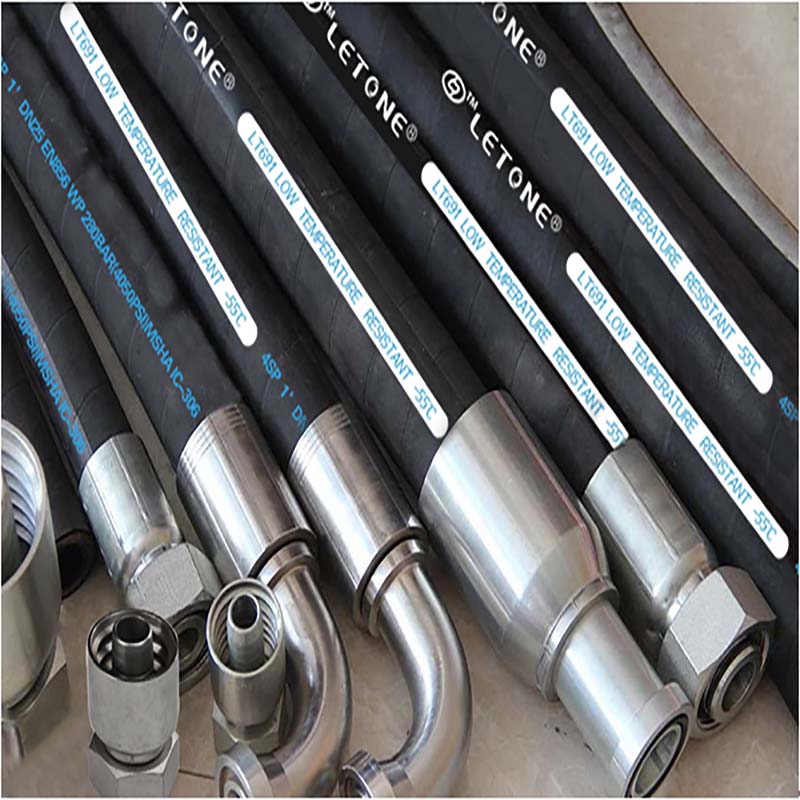
Application areas of EPDM high-temperature resistant hoses
In industrial and engineering applications, the selection of hoses is crucial, directly related to the safety and work efficiency of equipment. Among them, PTFE corrosion-resistant hoses and EPDM high-temperature resistant hoses are widely favored due to their excellent performance. This article will delve into the characteristics, application areas, and advantages and disadvantages of these two types of hoses, helping you make informed decisions when choosing.
1、 PTFE corrosion-resistant hose
1. Definition and characteristics of PTFE
Polytetrafluoroethylene (PTFE, commonly known as Teflon) is a polymer material with excellent chemical stability, widely used in environments that require corrosion resistance. The main features of PTFE hoses include:
-Corrosion resistance: PTFE exhibits excellent resistance to corrosive media such as chemicals and acids, and can withstand almost all solvents.
-Temperature resistance: PTFE hoses can be safely used in the temperature range of -40 ℃ to 220 ℃, suitable for applications under extreme temperature conditions.
-Low friction coefficient: PTFE has an extremely low friction coefficient, which reduces the resistance of fluid flow in pipelines and improves transportation efficiency.
2. Application areas of PTFE corrosion-resistant hoses
PTFE corrosion-resistant hoses are commonly used in industries such as chemical, pharmaceutical, food, and semiconductor. Specific applications include:
-Chemical process: used for transporting various acidic and alkaline liquids, such as sulfuric acid, hydrochloric acid, etc.
-Pharmaceutical industry: Provide a pollution-free and non-toxic delivery environment to ensure drug quality.
-Food industry: Because it does not react with food ingredients, it is widely used in the transportation of food additives and beverages.
3. Advantages and disadvantages of PTFE corrosion-resistant hoses
Advantages:
-Excellent chemical resistance, almost unaffected by any chemical substances.
-Excellent high temperature resistance and adaptability to various extreme working environments.
-Non adhesive properties, easy to clean and maintain.
Disadvantages:
-The cost is relatively high and may not be suitable for projects with limited budgets.
-PTFE material is relatively soft and has lower mechanical strength, which may require an additional protective layer.
2、 EPDM high temperature resistant hose
1. Definition and characteristics of EPDM
Ethylene propylene diene monomer (EPDM) is a kind of synthetic rubber, which is widely used because of its excellent high temperature resistance and aging resistance. The main features of EPDM hoses include:
-High temperature resistance: EPDM can withstand temperatures up to 150 ℃, making it suitable for use in high-temperature environments.
-Excellent weather resistance: Strong resistance to ultraviolet radiation, ozone, and climate change, with a long service life.
-Good elasticity and flexibility: maintains good physical properties in cooling and high temperature environments, suitable for dynamic applications.
2. Application areas of EPDM high-temperature resistant hoses
EPDM high-temperature resistant hoses are widely used in multiple industries, including:
-Automotive industry: used for connecting high-temperature components such as cooling systems and exhaust systems.
-Heating, Ventilation, and Air Conditioning (HVAC): A piping system used to transport high-temperature fluids, ensuring efficient operation of the system.
-Industrial applications: Widely used in chemical, food, and other industrial fields, requiring high-temperature resistant equipment and pipelines.
3. Advantages and disadvantages of EPDM high-temperature resistant hoses
Advantages:
-Excellent high-temperature resistance, suitable for various high-temperature working environments.
-Excellent aging resistance, suitable for outdoor environments.
-Good elasticity helps absorb vibrations.
Disadvantages:
-The chemical stability of certain solvents and oils is poor and not suitable for the transportation of all fluids.
-Long term exposure to sunlight may lead to performance degradation.
3、 How to choose the appropriate hose
When choosing hoses, companies need to consider factors such as actual application environment, fluid properties, and working temperature comprehensively.
1. Fluid type: If strong corrosive chemicals need to be transported, PTFE hoses are undoubtedly the choice; For high-temperature water or gas, EPDM has more advantages.
2. Working temperature: Understand the maximum and minimum working temperatures of the required hose under specific conditions to ensure its performance meets the requirements.
3. Budget: Consider cost factors and select hose materials that meet the project budget.
4. Durability and maintenance requirements: Evaluate the long-term performance of the hose and the convenience of daily maintenance.
Conclusion
Both PTFE corrosion-resistant hoses and EPDM high-temperature resistant hoses have their unique advantages and applicable scenarios. Understanding the characteristics and potential applications of each material is crucial when making a purchase to ensure that the hose you ultimately choose is capable of fulfilling its intended job tasks. By making reasonable choices, enterprises can not only improve production efficiency, but also reduce costs and ensure the long-term safe and stable operation of equipment.
In the future, with the development of technology and advances in materials science, it is expected that more new types of hose materials will enter the market, providing more choices and higher performance guarantees for various industries.
