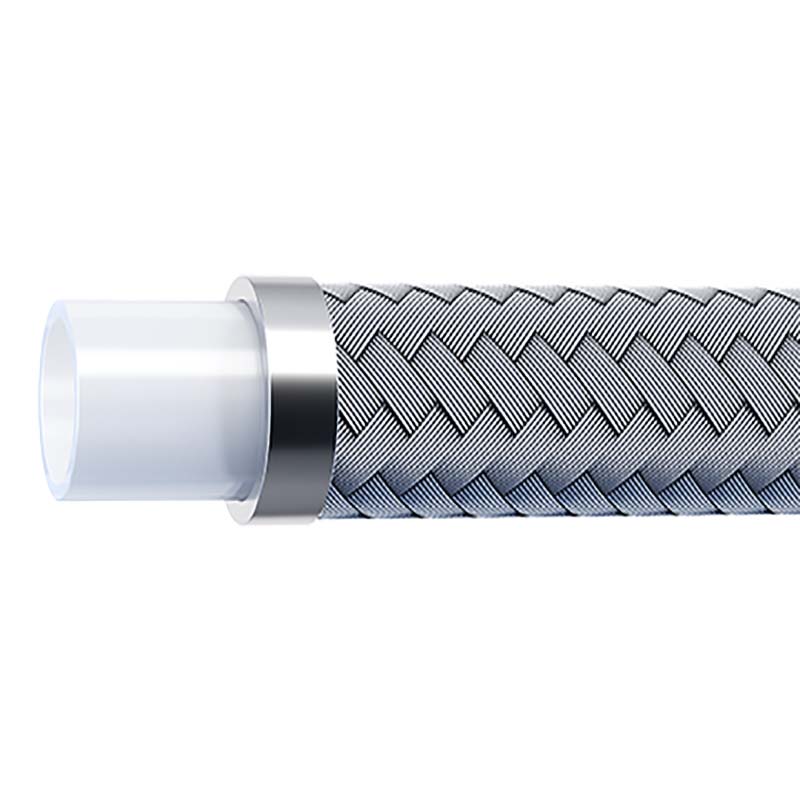
Performance Classification and Industrial Application of Industrial Chemical Conveying Hoses
Industrial fluid conveying accessories play a vital role in chemical processing, petrochemical transit and industrial raw material transfer industries. For corrosive solvent, acid-base liquid and industrial chemical medium transportation, ordinary rubber pipelines cannot meet long-term stable conveying demands, so professional graded pipeline products have become standard industrial supporting parts. The most widely used industrial pipeline types are UPE hose, general chemical hose, composite chemical hose and chemical delivery hose. Every type of chemical delivery hose is designed for differentiated chemical medium transmission scenarios with standardized structural and material configurations to fit diverse industrial conveying conditions.
As a mainstream inner-lined anti-corrosion pipeline, UPE hose occupies a large application share in medium-strength chemical conveying work. UPE refers to ultra-high molecular weight polyethylene material with stable chemical inertness, which is the core lining material of professional chemical delivery hose. Different from common PVC and natural rubber inner tubes, UPE lining inside UPE hose will not produce chemical dissolution, expansion or cracking when contacting diluted acid, diluted alkali, oily solvent and daily industrial chemical reagents. This core feature makes UPE hose suitable for frequent medium switching in factory pipeline circulation systems, with stable inner wall integrity under continuous chemical medium flushing.
General chemical hose refers to basic anti-corrosion conveying pipelines used for conventional non-highly corrosive industrial chemicals. This standard chemical hose adopts single-layer anti-corrosion inner structure and textile reinforcement layer, tailored for normal temperature, medium-pressure chemical transfer work. It is widely used for short-distance chemical fluid transfer, outdoor tank car liquid discharging and workshop fixed pipeline connection as a basic chemical delivery hose. Limited by single material structure, ordinary chemical hose is not applicable to high-concentration corrosive agents, high-temperature chemical liquid and long-distance circulating conveying scenarios, which sets clear usage boundaries for on-site industrial pipeline selection.
For harsh high-corrosion, high-pressure and temperature-variable working sites, composite chemical hose is the preferred upgraded conveying solution. Different from single-structure chemical hose, composite chemical hose adopts multi-layer composite laminated structure, combining polymer anti-corrosion lining, high-strength fiber winding reinforcement layer and weather-resistant outer protective layer. The composite layered structure integrates anti-permeation, pressure resistance and anti-aging performance, solving medium leakage, lining corrosion and pipeline burst risks existing in ordinary chemical delivery hose under extreme working conditions. Most underground chemical storage areas and fine chemical workshops adopt durable composite chemical hose for full-cycle sealed fluid delivery.
From industrial selection criteria, site operators can match suitable pipelines based on medium property, working pressure and ambient temperature. Conventional normal-temperature low-corrosion fluid can adopt common chemical delivery hose to control daily operation cost. Scenarios requiring wear resistance and anti-solvent performance prioritize UPE hose for extended onsite service life. High-concentration corrosive chemical transmission needs reinforced composite chemical hose to ensure long-term conveying safety. All four types including UPE hose, chemical hose, composite chemical hose and chemical delivery hose follow unified industrial testing standards, including acid-base soaking test, bursting pressure test and bending fatigue test, without customized brand exclusive process configuration.
With updated industrial chemical production standards, the market puts forward higher requirements on pipeline anti-leakage and environmental adaptability. The iteration of chemical delivery hose will focus on optimizing composite layer compatibility, improving low-temperature flexibility and enhancing medium isolation performance. UPE hose and composite chemical hose will be further popularized in cross-industry chemical transit fields, providing standardized, safe and low-loss conveying guarantee for global industrial chemical transportation operations.