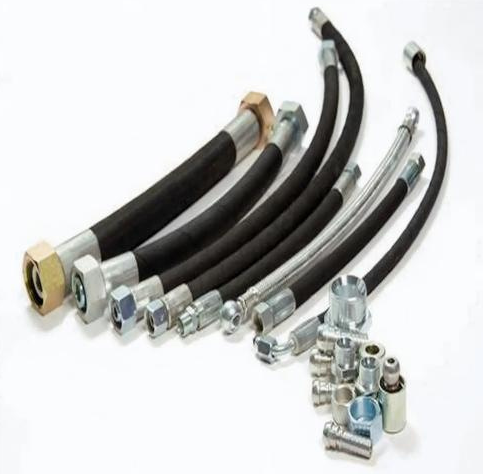
Offshore Platform Jumper Hose High Pressure
The stable connection of subsea fluid transmission systems largely depends on reliable flexible connecting pipelines. Among all subsea connection products, underwater jumper pipe is the key component linking subsea wellheads, manifolds and offshore surface facilities. The mainstream classified products include 17K jumper hose, FPSO jumper hose and offshore platform jumper hose. All these jumper hoses are manufactured in strict accordance with unified offshore industry specifications to adapt to continuous dynamic loads and harsh marine underwater environments.
17K jumper hose is manufactured following API Spec 17K industrial standards, which sets unified requirements for material selection, layered structure, pressure resistance and anti-fatigue performance of bonded flexible subsea hoses. Unlike ordinary marine rubber pipes, 17K jumper hose adopts a multi-layer integrated vulcanized composite structure. The inner lining is made of chemically inert polymer material to resist corrosion from crude oil, sour gas and seawater. Multiple layers of high-tensile steel wire reinforcement bear internal high pressure and external hydrostatic pressure in deep water. The outer rubber protective layer prevents seawater erosion, mechanical abrasion and ultraviolet aging when the underwater jumper pipe is laid on the seabed or suspended in the water column. This structural design effectively avoids pipe collapse, medium leakage and cracking caused by long-term wave-induced vibration.
FPSO jumper hose is a customized branch of underwater jumper pipe for floating production storage and offloading units. Floating vessels keep moving under ocean wave conditions, so FPSO jumper hose must withstand repeated bending and stretching without structural damage. Compared with fixed offshore platform jumper hose, FPSO jumper hose has enhanced anti-fatigue reinforcement layers to absorb relative displacement between the floating hull and subsea pipelines. Most FPSO production systems use this jumper hose for multiphase oil and gas transmission, water injection and chemical agent delivery. The flexible structure greatly reduces construction difficulty during offshore installation compared with rigid steel pipelines.
Offshore platform jumper hose serves fixed topside equipment and subsea flowline connections. This type of underwater jumper pipe features stable pressure resistance and bending performance for static and low-movement working conditions. It connects platform manifolds, riser bases and subsea production trees to form a complete transmission channel. Offshore platform jumper hose is widely used in shallow-water and medium-depth offshore oilfields, with standardized end flanges to realize quick connection with underwater pipelines via ROV operation. Every batch of offshore platform jumper hose will pass hydrostatic pressure testing, gas permeation testing and bending fatigue testing before delivery, ensuring long-term stable operation in high-salinity marine environments.
The classification and performance differentiation of underwater jumper pipe make these flexible hoses match different offshore working scenarios. Operators select 17K jumper hose for deepwater high-pressure projects, choose FPSO jumper hose for floating production units, and adopt offshore platform jumper hose for fixed topside facilities. As offshore oil and gas exploitation extends to deeper sea areas, the material formula and layered structure of underwater jumper pipe will keep being optimized. Improved anti-collapse performance and longer service life will make 17K jumper hose, FPSO jumper hose and offshore platform jumper pipe more reliable for full-cycle subsea fluid transmission in global offshore energy projects.
