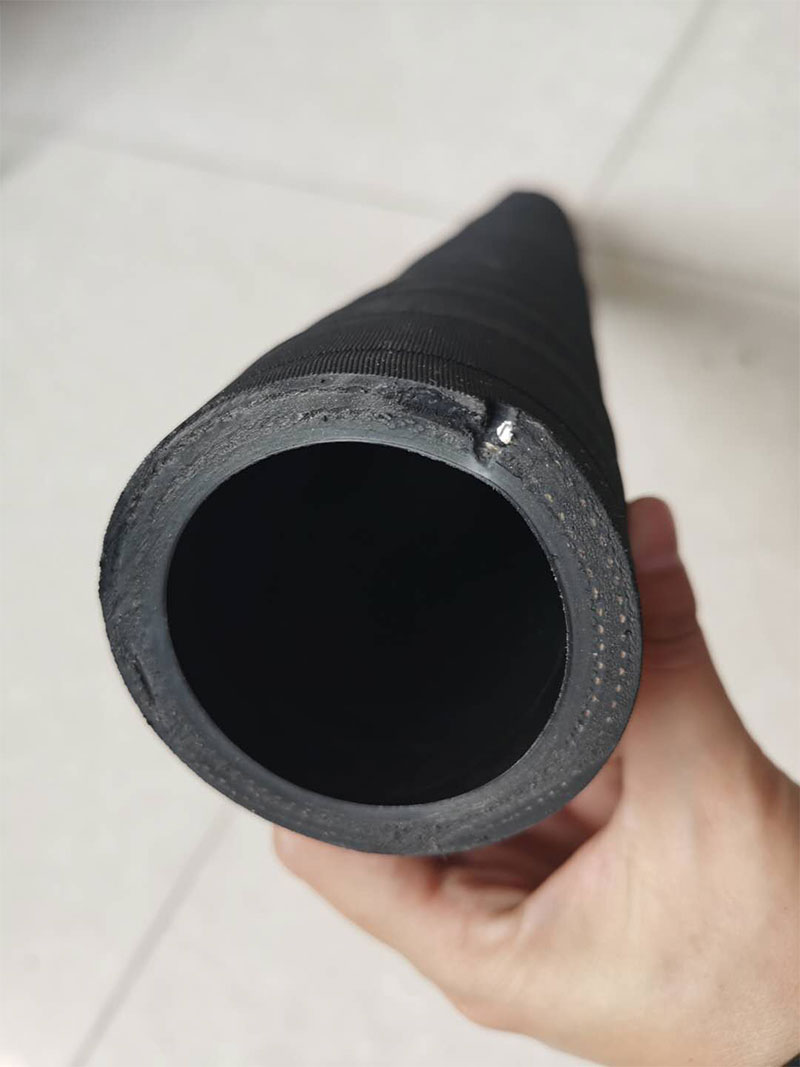
4inch large-diameter steel wire braided rubber hose drainage and sand suction hose
4-inch large-diameter steel wire braided rubber hose is a type of flexible pipeline product that uses steel wire braided layer as the reinforced skeleton and wear-resistant synthetic rubber as the pipe material. It is designed specifically for mining drainage, sand suction, and solid particle slurry transportation. Its nominal inner diameter is 4 inches (approximately 102mm), which belongs to the medium to large specification in the large-diameter hose series, balancing the high flow conveying capacity and the flexibility of on-site installation.
The structural design of this product must meet three core requirements simultaneously: withstand system working pressure without experiencing pipe rupture or joint detachment; Resist the continuous erosion and wear of the pipe wall caused by sand containing water flow; Maintain necessary bending performance in confined spaces underground in mines to meet the connection requirements of pipeline turning and mobile equipment.
Inner layer (inner rubber layer): mainly made of wear-resistant synthetic rubber, usually using a blend system of natural rubber and styrene butadiene rubber, or nitrile rubber system. The inner layer rubber material needs to have high tensile strength and tear strength to resist the high-speed erosion of solid particles. For working conditions with oily media, nitrile rubber formulations with better oil resistance can be selected.
Enhancement layer: Adopting a steel wire weaving structure, commonly consisting of one or two layers of high-strength steel wire weaving. The weaving angle is controlled around 54 ° 44 'to balance radial compression capacity and axial flexibility. The steel wire material is usually high carbon steel with a tensile strength of not less than 1800MPa. The surface is plated with copper or zinc to enhance the bonding strength with rubber.
Outer layer (outer rubber layer): Made of wear-resistant and weather resistant synthetic rubber as the main material, it has the characteristics of ozone resistance, UV resistance, and mechanical wear resistance. In the underground environment of mines, the outer rubber layer also needs to have flame retardant and anti-static properties to meet the relevant requirements of coal mine safety regulations.
2、 Performance parameters and specification series
Inner diameter specification: 4 inches (DN100), suitable for standard interfaces of mine drainage pumps, sand pumps, and mud pumps.
Working pressure: Depending on the number of layers of steel wire weaving, the working pressure is usually in the range of 1.0MPa to 2.5MPa. The single-layer weaving structure is suitable for low-pressure drainage scenarios, and the double-layer weaving structure can withstand higher working pressures.
Blasting pressure: generally 3 to 4 times the working pressure, providing sufficient safety margin.
Temperature range: The standard product operates within a temperature range of -20 ℃ to+80 ℃, meeting the environmental requirements for underground and surface operations in mines.
Minimum bending radius: Depending on the pipe diameter and reinforcement layer structure, the minimum bending radius for 4-inch rubber hoses is usually in the range of 600mm to 900mm.
Length customization: The product supports customizing the length according to user needs. Common supply lengths are 10 meters and 20 meters, and non-standard lengths can also be provided according to the layout of underground pipelines. Custom length rubber hoses can be equipped with flanges, quick couplings, or union connectors at both ends.
3、 Adaptation of mining drainage and sand suction conditions
Mine drainage: In the mine water inflow discharge system, large-diameter rubber hoses are used to connect drainage pumps and drainage pipelines. The underground drainage medium often contains solid particles such as rock powder and coal powder, which have a significant wear effect on the pipe wall. The wear resistance of the inner layer rubber material is a key factor determining the service life of the rubber hose.
Sand suction and dredging: In tailings pond dredging, river dredging, and underground filling operations, rubber hoses are used to transport solid-liquid mixed media with high sand content. The particle size and flow rate of sand have a significant impact on the wear rate of pipe walls. When selecting, the wear resistance level requirements should be evaluated based on the particle size distribution and content of solid particles in the medium.
Dual use suction and discharge: Some working conditions require the hose to have both suction and discharge functions. Under negative pressure suction conditions, the hose must have sufficient anti negative pressure capability to prevent the collapse of the pipe body. The steel wire braided structure not only provides compressive capacity, but also contributes to the radial rigidity of the pipe body.
Mobile device connection: In underground mobile drainage pump stations or dredging equipment, rubber hoses need to move and bend frequently, and flexibility is an important consideration in selection.
4、 Selection and usage points
Confirm the working pressure and weaving layers: Choose a single-layer or double-layer weaving structure based on the maximum working pressure of the system to ensure that the rated working pressure covers the actual working conditions.
Evaluate the wear resistance of the medium: Determine the wear resistance level of the inner layer rubber material based on the particle size, hardness, and concentration of solid particles in the conveying medium.
Confirm the requirements for negative pressure conditions: If it is needed for suction conditions, it is necessary to confirm whether the anti negative pressure performance of the hose meets the requirements.
Confirm flame retardancy and anti-static performance: When used underground in coal mines, it is necessary to confirm that the product meets the requirements of relevant safety regulations for flame retardancy and anti-static performance.
Verify the bending radius and installation space: Confirm whether the minimum bending radius of the rubber hose meets the installation requirements based on the underground pipeline layout.
Specify the length and connection method: Customize the length of the rubber hose and the type of connection at both ends according to the pipeline direction and pump body interface specifications.
Check certification documents: Confirm that the product has the corresponding factory pressure test report and mining product safety mark (if applicable).
