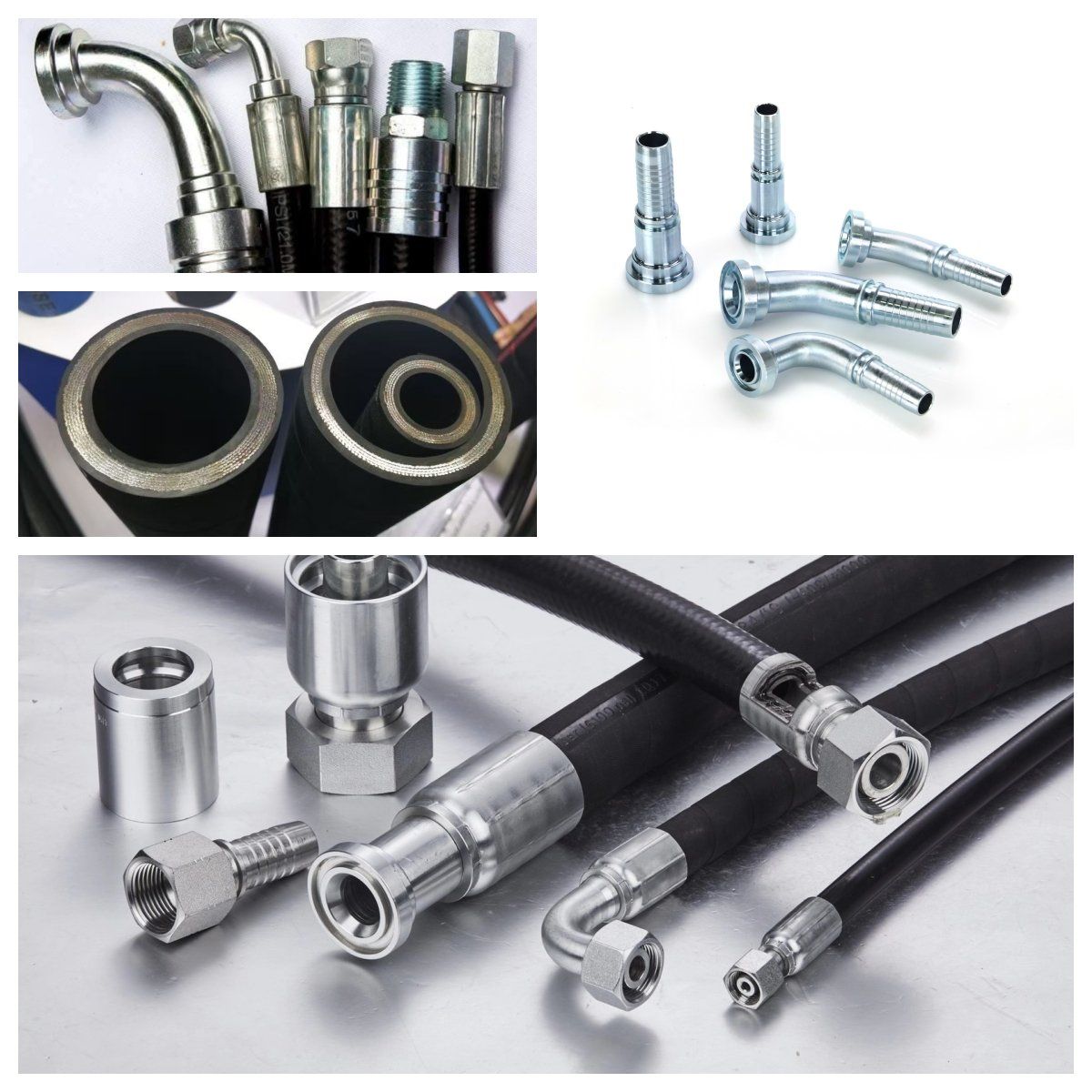
UPE conveying pipe for corrosion-resistant chemical transportation
High wear-resistant UPE chemical conveying pipe is a type of corrosion-resistant and wear-resistant pipeline product made of Ultra High Molecular Weight Polyethylene (UPE or UHMWPE) as the pipe material. It is specifically used for conveying acid, alkali, salt solutions, and solid particle media in industries such as chemical, metallurgical, mining, and power. The molecular weight of UPE is usually between 1.5 million and 5 million, and its ultra long molecular chain structure endows the material with a series of performance characteristics that distinguish it from ordinary polyethylene and conventional engineering plastics.
From the perspective of materials science, the wear resistance of UPE is at a relatively high level among thermoplastic materials. Its wear resistance mechanism is different from that of metal materials: the wear of metals is dominated by surface hardness and crystal slip, while the long molecular chains of UPE dissipate energy through segment orientation and entanglement network during friction, forming a self-lubricating transfer film, thereby reducing the wear rate. This mechanism enables UPE to exhibit a longer service life in slurry flushing conditions containing solid particles.
2、 Chemical corrosion resistance performance
Acid resistance: UPE has good tolerance to various inorganic acids at room temperature. UPE can maintain chemical stability in media such as hydrochloric acid (at any concentration), phosphoric acid, and hydrofluoric acid (at concentrations below 60%). Sulfuric acid is suitable for concentrations below 70% and temperatures not exceeding 60 ℃. Nitric acid can also be used at room temperature with a concentration below 30%. It should be noted that strong oxidizing acids may oxidize UPE under high temperature or high concentration conditions.
Alkali resistance: UPE has excellent tolerance to alkaline media such as sodium hydroxide, potassium hydroxide, and ammonia water. UPE maintains stable performance in various alkaline solutions within the range of room temperature to 60 ℃, and is suitable for alkali solution transportation in the chlor alkali industry, alkali production industry, and wastewater treatment.
Salt resistance: UPE has excellent corrosion resistance to various salt solutions such as sodium chloride, potassium chloride, sodium sulfate, magnesium sulfate, etc. In the fields of salt chemical industry, seawater desalination, and lithium extraction from salt lakes, UPE pipelines can be used for the transportation of saltwater, brine, and high salt wastewater.
Organic solvent resistance: UPE has tolerance to some organic solvents such as alcohols, esters, and ketones, but has limited tolerance to non-polar solvents such as fatty hydrocarbons, aromatic hydrocarbons, and halogenated hydrocarbons. When transporting mixed media containing such solvents, swelling and permeation risks need to be evaluated.
Applicable boundary: The chemical corrosion resistance of UPE is affected by the concentration, temperature, and contact time of the medium. An increase in temperature usually reduces the corrosion resistance of materials. It is recommended to conduct specialized immersion tests to verify applicability under high temperature (over 80 ℃) or high concentration strong oxidizing medium conditions.
3、 Physical and mechanical properties
Wear resistance: The wear resistance of UPE is at a relatively high level in plastic materials, superior to polytetrafluoroethylene, nylon, and ordinary polyethylene. When transporting slurry or suspension containing solid particles, UPE pipelines can effectively resist particle erosion and wear. Its wear resistance is influenced by molecular weight, crystallinity, and filler system. The higher the molecular weight, the better the wear resistance.
Impact resistance: UPE maintains high impact strength even under low temperature conditions. Its impact strength can still maintain a high proportion of normal temperature at -40 ℃, making it suitable for outdoor pipeline laying in cold regions.
Friction coefficient: The UPE pipe wall is smooth, with a low friction coefficient and low fluid resistance, which helps to reduce transportation energy consumption. Low friction coefficient also helps to reduce the adhesion and deposition of media on the pipe wall, reducing the risk of scaling.
Temperature resistance range: The conventional operating temperature range for UPE pipes is -40 ℃ to+80 ℃. When the temperature exceeds this range, the mechanical and chemical resistance properties of the material may change and require special evaluation.
Resistance to environmental stress cracking: UPE has lower sensitivity to environmental stress cracking, and its resistance to cracking is superior to ordinary polyethylene in long-term exposure to chemical media.
4、 Connection method and construction points
Connection methods: The connection methods of UPE conveying pipes mainly include flange connection, butt welding connection, and socket welding. Flange connection is easy to disassemble and maintain, suitable for pipe sections that require frequent disassembly and assembly; Welding connections can obtain joints with the same strength as the pipe body, suitable for long-distance conveying pipelines; Socket welding is suitable for small-diameter pipelines.
Thermal expansion compensation: The linear expansion coefficient of UPE is higher than that of metal pipelines. In working conditions with large temperature changes, pipeline design needs to consider thermal expansion compensation measures. Thermal displacement can be absorbed through expansion joints, bend compensation, or sliding brackets.
Support and fixation: The spacing between pipeline supports should be determined based on the diameter of the pipe and the temperature of the medium. The rigidity of UPE pipes is lower than that of metal pipes, and the support spacing should be appropriately reduced to prevent the pipe body from sagging and deforming.
Construction precautions: During the cutting and welding process of UPE pipes, the environment should be kept clean to prevent impurities from entering the pipeline system. Welding operations should be carried out by personnel with corresponding qualifications, and welding parameters should be adjusted according to the pipe specifications and site conditions.
5、 Application scenarios
Acid solution transportation: used in industries such as metallurgy, electroplating, and battery manufacturing to transport acid solutions such as sulfuric acid, hydrochloric acid, nitric acid, and acid washing waste liquids.
Alkali solution transportation: used in industries such as chlor alkali, papermaking, textile printing and dyeing to transport alkali solutions such as sodium hydroxide and potassium hydroxide.
Salt solution transportation: used in the fields of salt chemical industry, seawater desalination, salt lake lithium extraction, etc., for transporting saltwater, brine, and high salt wastewater.
Chemical wastewater treatment: Used in the wastewater treatment system of chemical industrial parks to transport corrosive wastewater containing acid, alkali, and salt.
Solid slurry transportation: Used in industries such as mining and metallurgy to transport acidic or alkaline slurries containing solid particles. The high wear resistance of UPE has practical value in such working conditions.
Tailings and ash conveying: In the tailings conveying and ash conveying systems of mineral processing plants and power plants, it is used to replace traditional metal pipelines and reduce the frequency of replacement caused by wear and corrosion.
