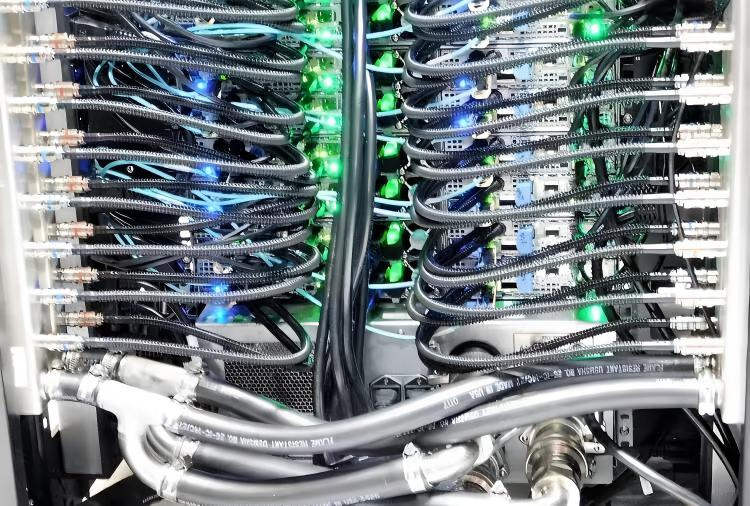
EPDM liquid cooled hose flame retardant UL94V-0 corrosion-resistant
EPDM liquid cooled hose is a type of flexible piping product mainly made of Ethylene Propylene Diene Monomer rubber, designed specifically for the transportation of cooling media in liquid cooling systems. Its core application scenarios include cold plate liquid cooling systems in data centers, water cooling circuits for power electronic equipment, and thermal management pipelines for battery energy storage systems. The saturated carbon chain of EPDM molecular structure endows the material with excellent weather resistance and chemical stability, enabling it to maintain stable performance in long-term contact with cooling media.
In the battery liquid cooling system, the pipeline material needs to simultaneously handle the contact between the coolant and possible electrolyte. Lithium hexafluorophosphate, as the main solute in lithium-ion battery electrolytes, decomposes into highly corrosive acidic compounds such as hydrogen fluoride when exposed to trace amounts of water. Hydrogen fluoride has a corrosive effect on metals and various polymer materials, so the selection of liquid cooling pipeline materials needs to carefully evaluate their tolerance in electrolyte environments.
2、 Flame retardant UL94 V-0 performance
UL94 V-0 is the highest flame retardant rating in vertical combustion testing of plastic materials, developed by Underwriters Laboratories. According to this standard, the criteria for determining V-0 grade include: each sample must have a flame burning and smoldering time of no more than 10 seconds after removing the flame; The total combustion time of each of the five samples ignited twice shall not exceed 50 seconds; The sample does not produce combustion droplets that ignite the cotton below.
The outer layer of EPDM liquid cooled hose can achieve UL94 V-0 grade through flame-retardant formula design. The selection of flame retardants should take into account the balance between flame retardant efficiency and material physical properties. The industry group standard specifies that EPDM hoses used in data center cold plate liquid cooling systems must have a flame retardant rating of UL94 V-0 for the outer layer. This standard also stipulates that the zinc, aluminum, and halogen content limits of the inner layer adhesive are zero to ensure the purity of the cooling medium.
The safety significance of flame retardant performance for liquid cooling systems lies in the fact that when the system experiences electrical faults or local overheating, pipeline materials are less likely to become channels for flame spread, which helps to control potential fires within a limited range.
3、 Corrosion resistance of electrolyte
Related studies have provided reference data on the tolerance of EPDM in lithium-ion battery electrolytes. A comparative study on the performance of five types of rubber, EPDM, NBR, FKM, VMQ, and FVMQ, in the sealing application of lithium-ion batteries. The samples of each material were immersed in propylene carbonate at 80 ℃ for up to 1000 hours. The results showed that EPDM and VMQ exhibited good electrolyte resistance, and both materials had a volume resistivity of over 10 ¹⁰Ω· cm. The study concludes that EPDM and VMQ are suitable material choices for sealing applications in lithium-ion batteries.
In terms of chemical resistance of EPDM, comprehensive rubber chemical compatibility data shows that the overall rating of EPDM for acid, alkali, ozone, and weather resistance is at a good to excellent level. EPDM has good tolerance to polar organic solvents such as alcohols and ketones, but limited tolerance to non-polar solvents such as fatty hydrocarbons, aromatic hydrocarbons, and halogenated hydrocarbons. The carbonate solvents in the electrolyte belong to polar organic solvents and have relatively good compatibility with EPDM.
It should be noted that EPDM is more sensitive to oil-based antifreeze agents. Technical data suggests that when using EPDM pipes, oily antifreeze should be avoided as the additives may have a corrosive effect on EPDM. In liquid cooling systems, if using coolant containing oil-based additives, their impact on EPDM pipelines needs to be evaluated.
4、 Structural design and performance parameters
EPDM liquid cooled hoses typically adopt a multi-layer composite structure. The inner layer is a high-purity EPDM synthetic rubber crosslinked with peroxide. Compared with the sulfur vulcanization system, the peroxide vulcanization system can form a more uniform crosslinked network and has a lower extractable content, which helps maintain the cleanliness of the cooling medium. The reinforcement layer is woven with synthetic fibers or aramid threads to provide pressure bearing capacity. The outer layer is made of flame-retardant EPDM synthetic rubber, which meets the UL94 V-0 grade requirements.
Temperature range: The working temperature of standard products covers -40 ℃ to+120 ℃, and some products can be extended to+150 ℃. This temperature range covers typical operating conditions of data center liquid cooling systems, power electronic equipment cooling, and battery thermal management systems.
Working pressure: The maximum working pressure for common products is 10 bar (approximately 145 psi), the burst pressure is 40 bar (approximately 580 psi), and the safety factor is 4:1.
Bending radius: EPDM liquid cooled hoses have good flexibility, with a bending radius of about twice the diameter of the hose, making it easy to wire in compact equipment spaces.
Electrical insulation performance: EPDM material has a high volume resistivity and is suitable for liquid cooled pipeline scenarios that require electrical insulation. Some products are designed with non-conductive inner and outer adhesive layers to meet the insulation requirements of high-voltage power equipment cooling systems.
5、 Application scenarios and selection criteria
Data center liquid cooling system: EPDM liquid cooling hoses are used to connect cold plates, cooling distribution units, and supply and return liquid manifolds, transporting water ethylene glycol coolant. The outer UL94 V-0 flame retardant rating provides protection for fire safety between data center equipment.
Battery energy storage system: Establish a flexible connection between the battery pack liquid cooling plate and the cooling pipeline. The electrolyte resistance of EPDM makes it suitable for environments that may come into contact with electrolytes in battery thermal management systems.
Power electronic equipment: power module cooling circuit used for frequency converters, inverters and other equipment. The electrical insulation performance of EPDM helps maintain the insulation level of the system.
Selection suggestion:
Confirm the compatibility of the cooling medium type (deionized water, ethylene glycol aqueous solution, or specialized coolant) with EPDM material
Verify the UL94 V-0 flame retardant certification document for the outer layer adhesive
Evaluate whether the working temperature and pressure meet the actual working condition requirements
Confirm whether the bending radius of the pipeline is suitable for the installation space of the equipment
Pay attention to the cleanliness index of the inner layer adhesive, which is particularly important for high-purity cooling systems
