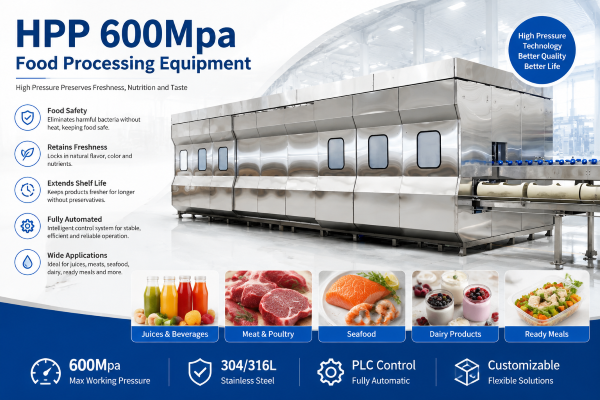
300L 600Mpa HPP sterilization equipment
HPP (High Pressure Processing) sterilization equipment is a type of non thermal processing equipment that uses ultra-high hydrostatic pressure as a sterilization method. The core principle is to place sealed packaged food in a high-pressure container, using water as the pressure transmission medium, and apply a static water pressure of 100MPa to 600MPa under normal or low temperature conditions. This pressure is evenly and instantaneously transmitted to the interior of the food, effectively inactivating pathogenic and spoilage bacteria by disrupting the structure of microbial cell membranes, denaturing key proteins, and causing enzyme inactivation.
Compared with traditional heat transfer based sterilization methods such as pasteurization and high-temperature cooking, the essential difference of HPP technology is that no external heat source is introduced during the sterilization process, and the processing temperature is usually controlled within the range of 5 ℃ to 25 ℃, belonging to the category of low-temperature cold sterilization. Due to the fact that pressure transmission is not limited by the size and shape of the product, regardless of the volume of the food, the pressure borne by each point inside is basically the same, and the sterilization effect is uniform. This non thermal processing characteristic allows the thermal sensitive nutrients and natural flavors of food to be largely preserved.
2、 Core structure of equipment
High pressure chamber: The core pressure bearing component of the equipment is manufactured using high-strength stainless steel forgings combined with steel wire wrapped prestressed structures. The steel wire winding process involves winding high-strength steel wire around the outer wall of the cavity and applying pre tension force, so that the cavity is in a pre stress state when subjected to ultra-high internal pressure, improving fatigue resistance and safety margin. The specifications of the cavity range from several liters of capacity at the laboratory level, to dozens of liters at the pilot level, and then to hundreds of liters at the industrial level. The cavity diameter of large industrial equipment can reach over 300mm, and the effective working length can reach over 3000mm.
Boosting system: composed of a high-pressure pump, a booster, and a pressure control valve group. After the low-pressure water is initially pressurized by the high-pressure pump, the pressure is amplified to the target level by the booster. The configuration of dual group superchargers working together can improve the boosting efficiency, ensuring that the target pressure of 600MPa can be reached within 2 to 5 minutes.
Temperature control system: Although it is a non thermal process, the water medium and food will experience a certain temperature rise during the pressurization process, with an increase of about 3 ℃ every 100MPa. The equipment controls the medium temperature within the set range through a heat exchanger and water circulation system to ensure that the processing temperature meets the process requirements.
Material loading and unloading system: Industrial equipment is usually equipped with loading baskets and automatic conveyors to achieve batch loading and unloading of products. The design of the loading basket should ensure that the water flow can evenly surround each product, avoiding uneven transmission of local pressure.
Control system: Using PLC programmable logic controller combined with touch screen human-machine interface, it can set and monitor key parameters such as pressure, holding time, temperature, etc., and record processing data for each batch to meet food safety traceability requirements.
3、 Core technical parameters
Working pressure: The maximum working pressure of standard industrial equipment is 600MPa, and some equipment can be adjusted within the range of 100MPa to 600MPa. For products that only require an extended shelf life, lower pressure can be used to reduce energy consumption and equipment loss.
Processing temperature: Conventional HPP processing is carried out in the range of 5 ℃ to 25 ℃, which belongs to normal temperature to low temperature processing. Some special applications can be carried out below 80 ℃ to meet the process requirements of specific products.
Pressure holding time: determined according to the product type and the pressure resistance characteristics of the target microorganisms, usually 1 to 5 minutes. Spore microorganisms require longer holding times or higher pressure levels.
Cycle efficiency: The complete cycle of a single batch includes five stages: loading, boosting, holding, unloading, and unloading, with a total time of approximately 6 to 12 minutes. It takes about 2 to 5 minutes to increase the pressure to 600MPa, and the pressure relief is instantaneous.
Sterilization effect: It can effectively kill common foodborne pathogens such as Listeria, Salmonella, Escherichia coli, Vibrio, as well as spoilage microorganisms such as yeast and mold. The bactericidal effect on bacterial spores is limited, so the processed product needs to be stored in conjunction with cold chain.
4、 Process adaptation for multiple categories of food
Juice and Beverages: The earliest commercial application of HPP technology. After HPP treatment, cold pressed fruit juice can effectively kill spoilage microorganisms and pathogenic bacteria, while avoiding flavor deterioration and nutrient loss caused by heat sterilization. The retention rates of vitamin C, anthocyanins, and polyphenols are significantly higher than those of the heat sterilization process. The product can have a shelf life of 30 to 90 days under cold chain conditions from 0 ℃ to 4 ℃.
Meat products and ready to eat meat: including sliced ham, ready to eat chicken breast, braised cooked food, etc. HPP can effectively inactivate pathogenic bacteria such as Listeria monocytogenes without altering the tenderness and juiciness of meat products. The shelf life of processed ready to eat meat products can be extended from several weeks to several months under cold chain conditions.
Seafood and shellfish: HPP has unique advantages in seafood processing. For shellfish products, pressure can automatically separate the meat from the shell, achieving a high meat yield and eliminating the need for manual shell prying or steaming. At the same time, this technology can effectively inactivate marine pathogenic bacteria such as Vibrio, maintaining the fresh and sweet flavor and elastic taste of seafood.
Prefabricated dishes and ready to eat foods: suitable for prepared foods that require preservation of the taste, including Chinese dishes, soups, sauces, ready to eat salads, etc. HPP treatment can delay enzymatic browning, maintain the crispness and natural color of vegetables, without the need for chemical color protectants.
Applicable boundary: HPP technology has a significant effect on high water activity products. For low water activity products such as dried seasonings, dehydrated vegetables, nuts, baked goods, etc., the sterilization effect is limited due to the lack of sufficient free water as a pressure transmission medium. Completely frozen products are not suitable for conventional HPP treatment and need to be thawed to a suitable temperature first. In addition, the product packaging must be a flexible sealed packaging that can withstand approximately 15% volume compression without breaking.
